
Two new Powerwall batteries, installed by lunchtime
Show 3 more photos Show 9 more photos Hide additional photos
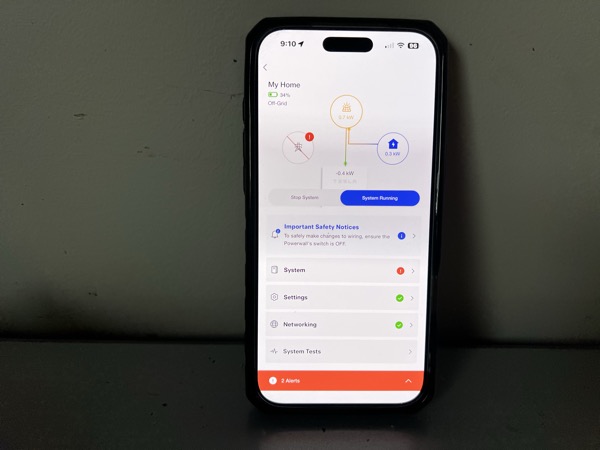

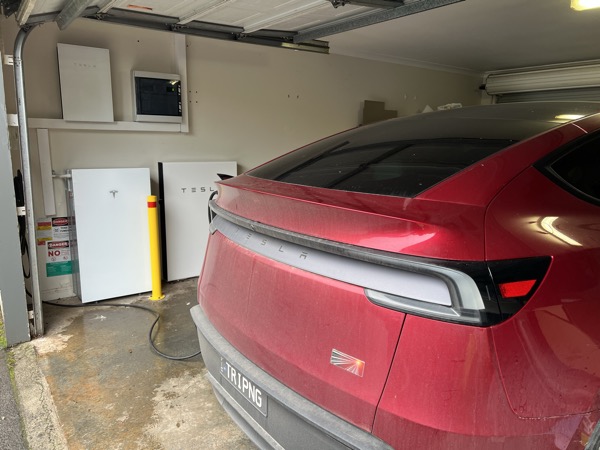
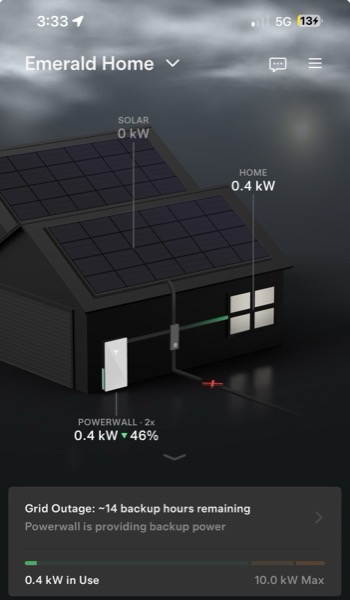
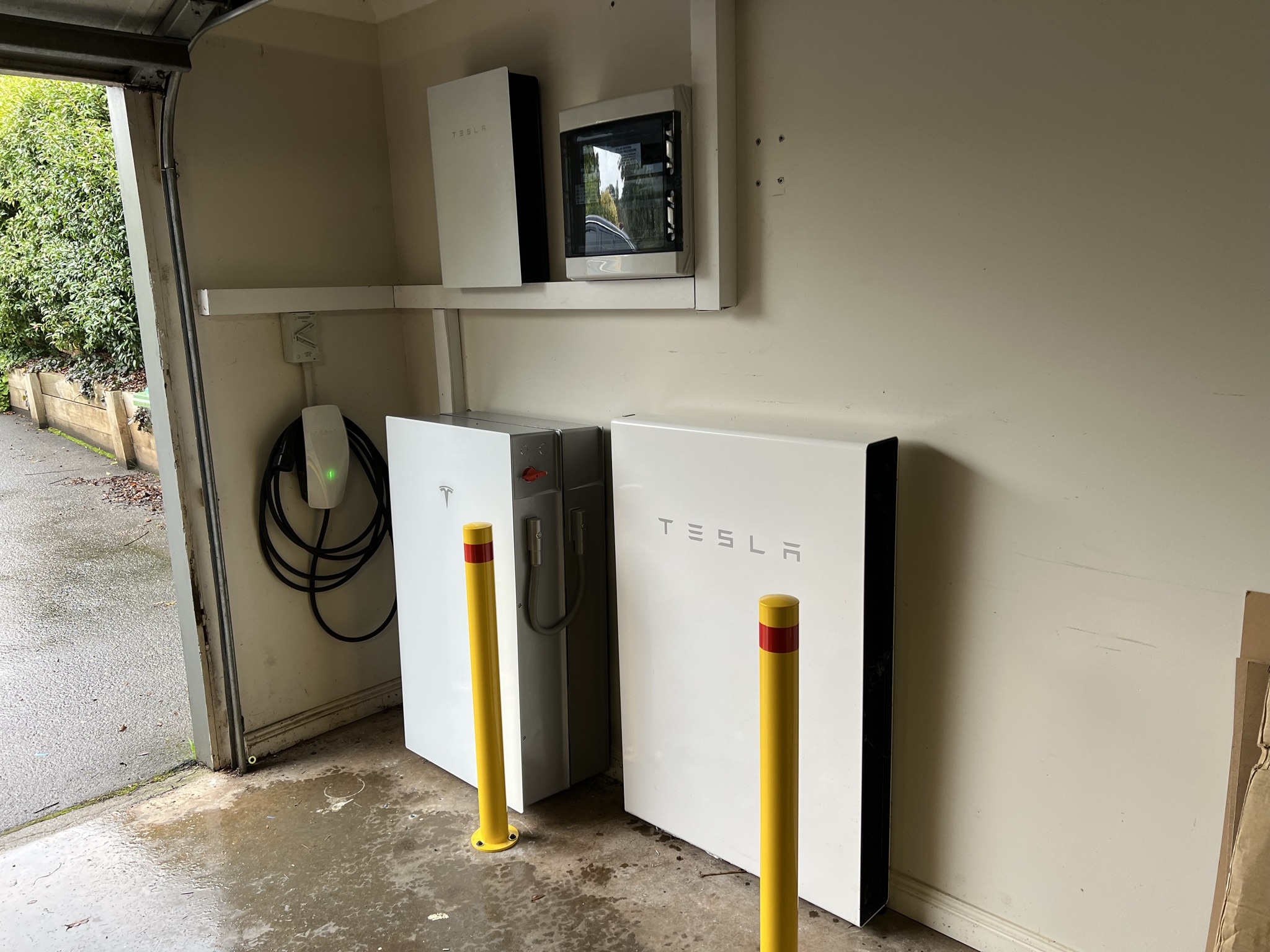
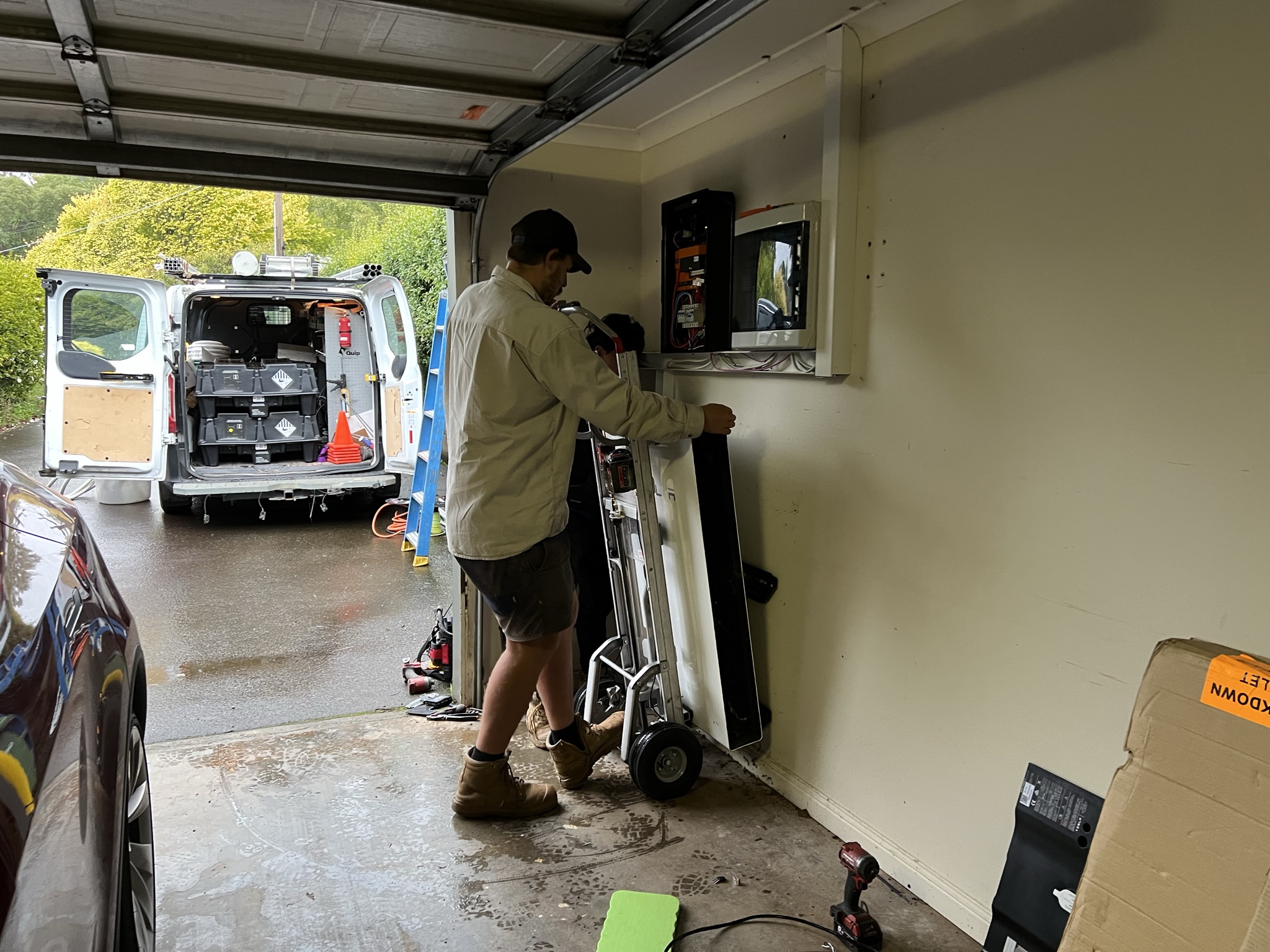
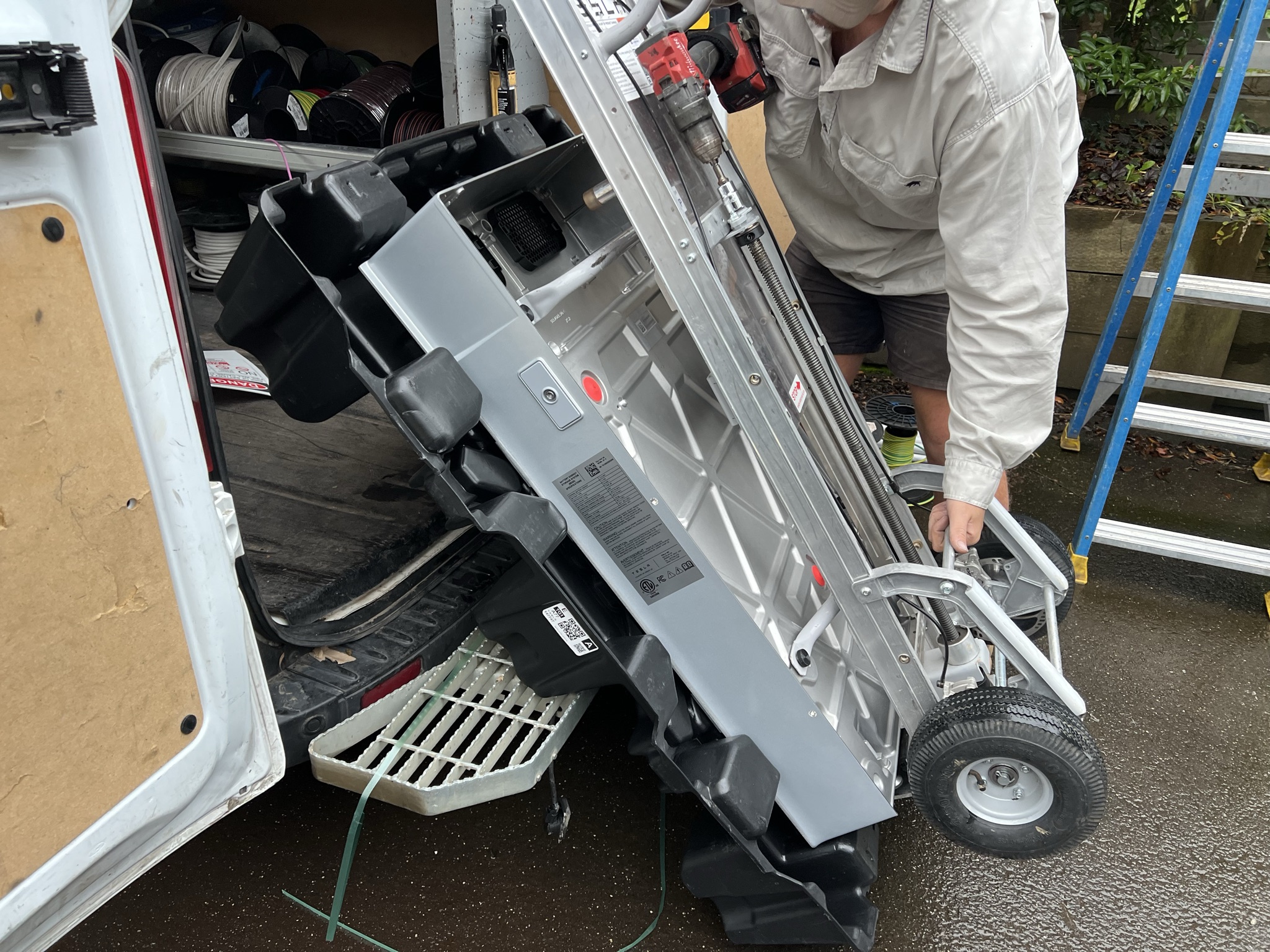
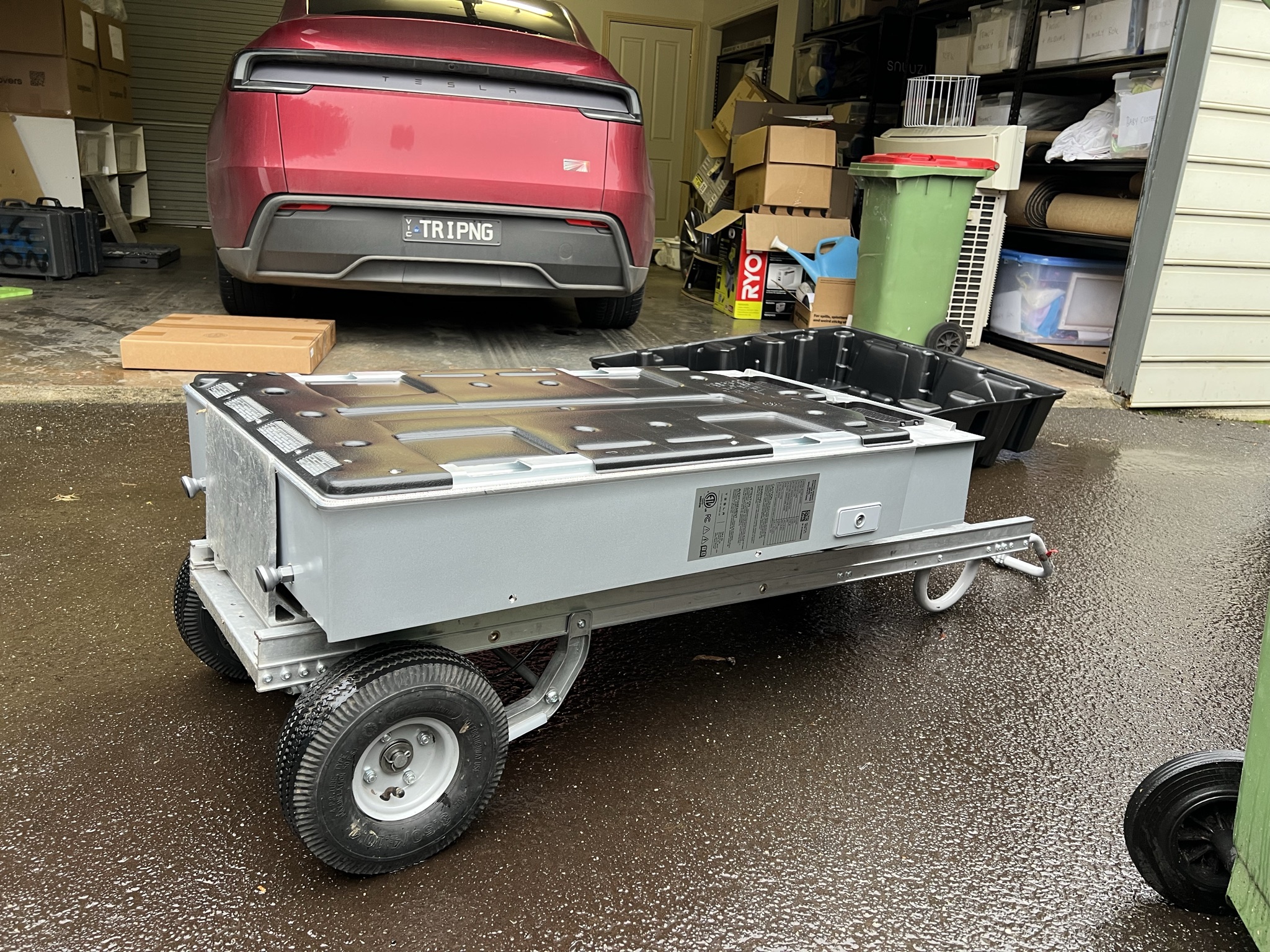
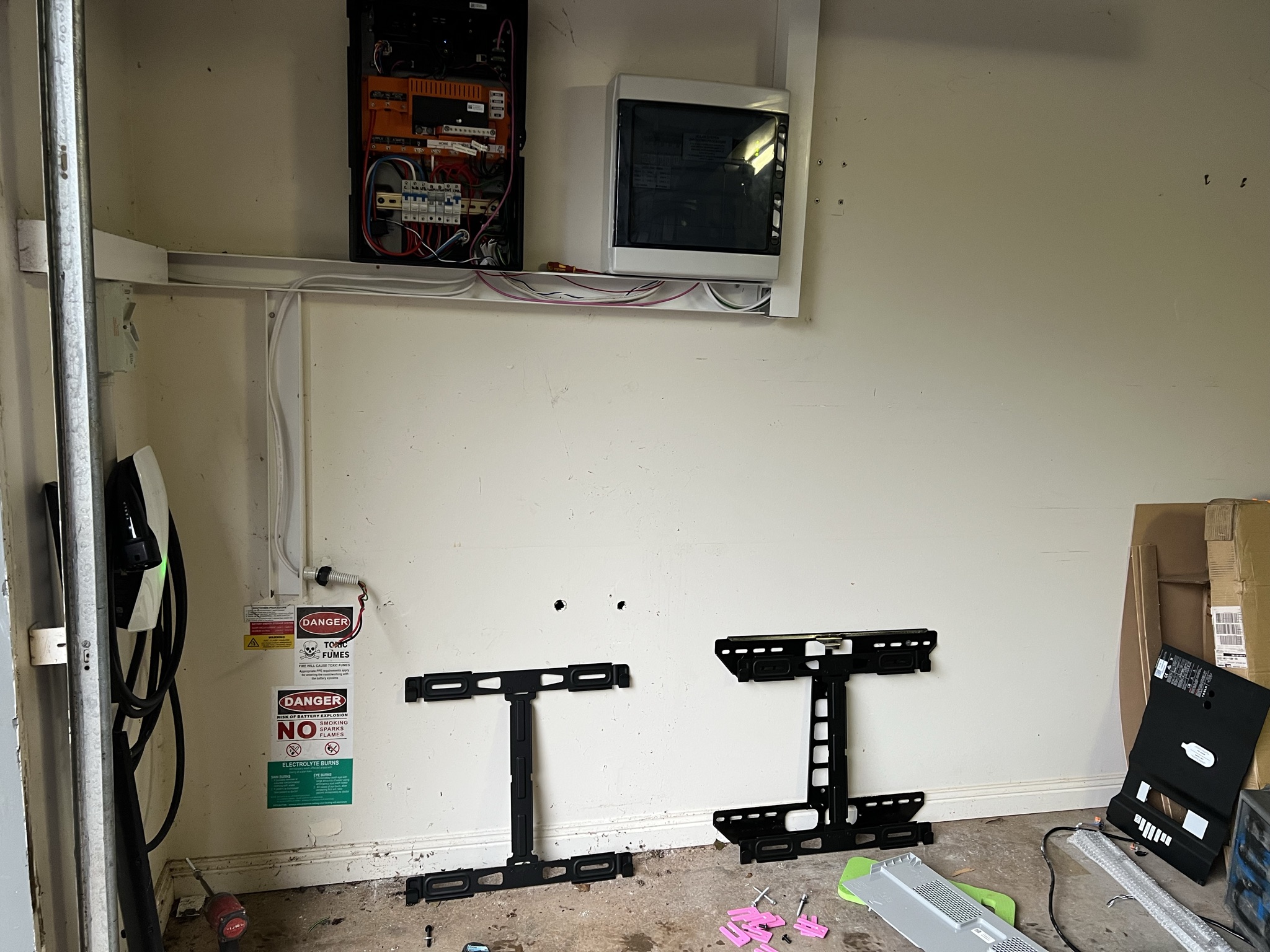
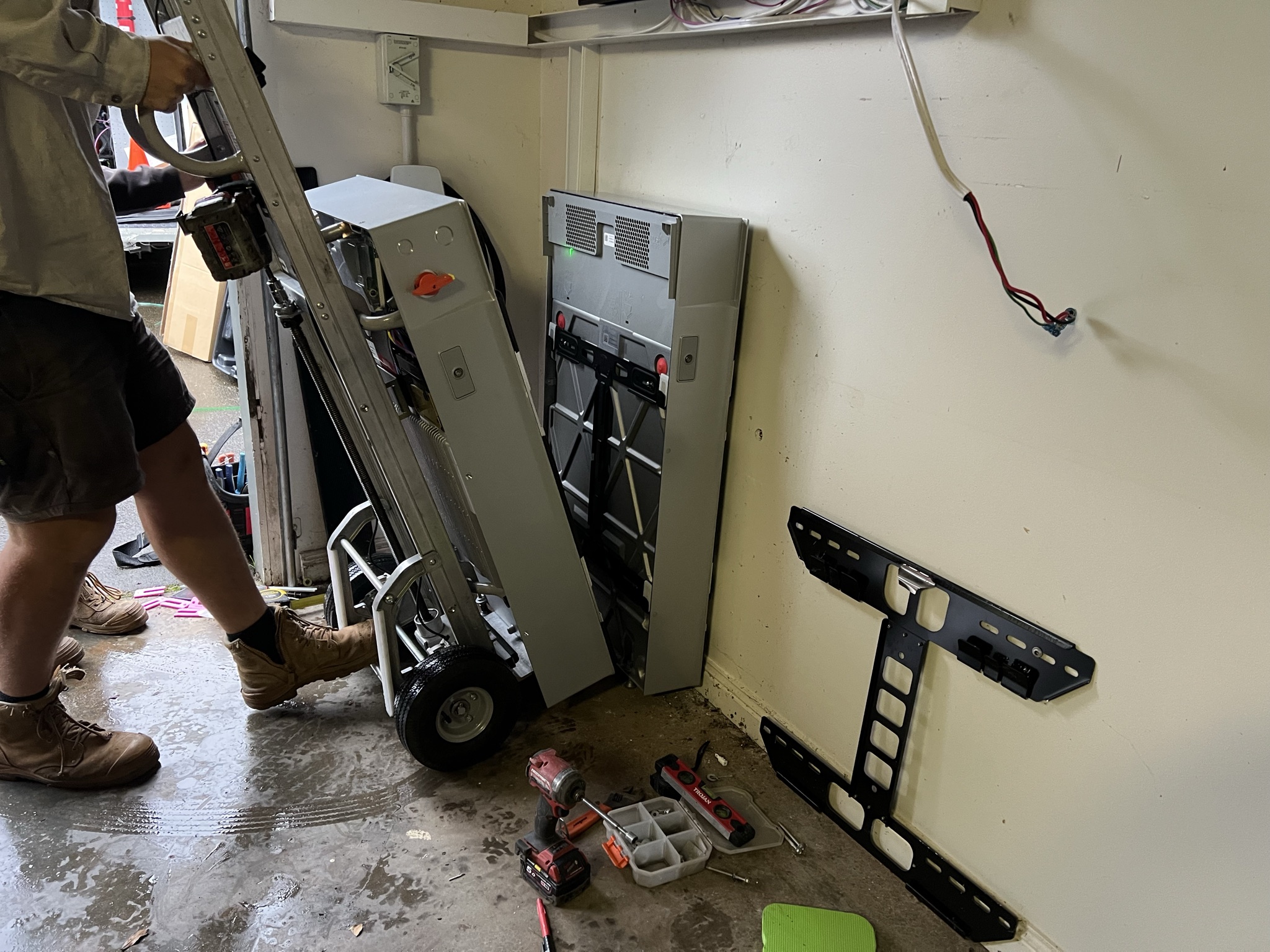
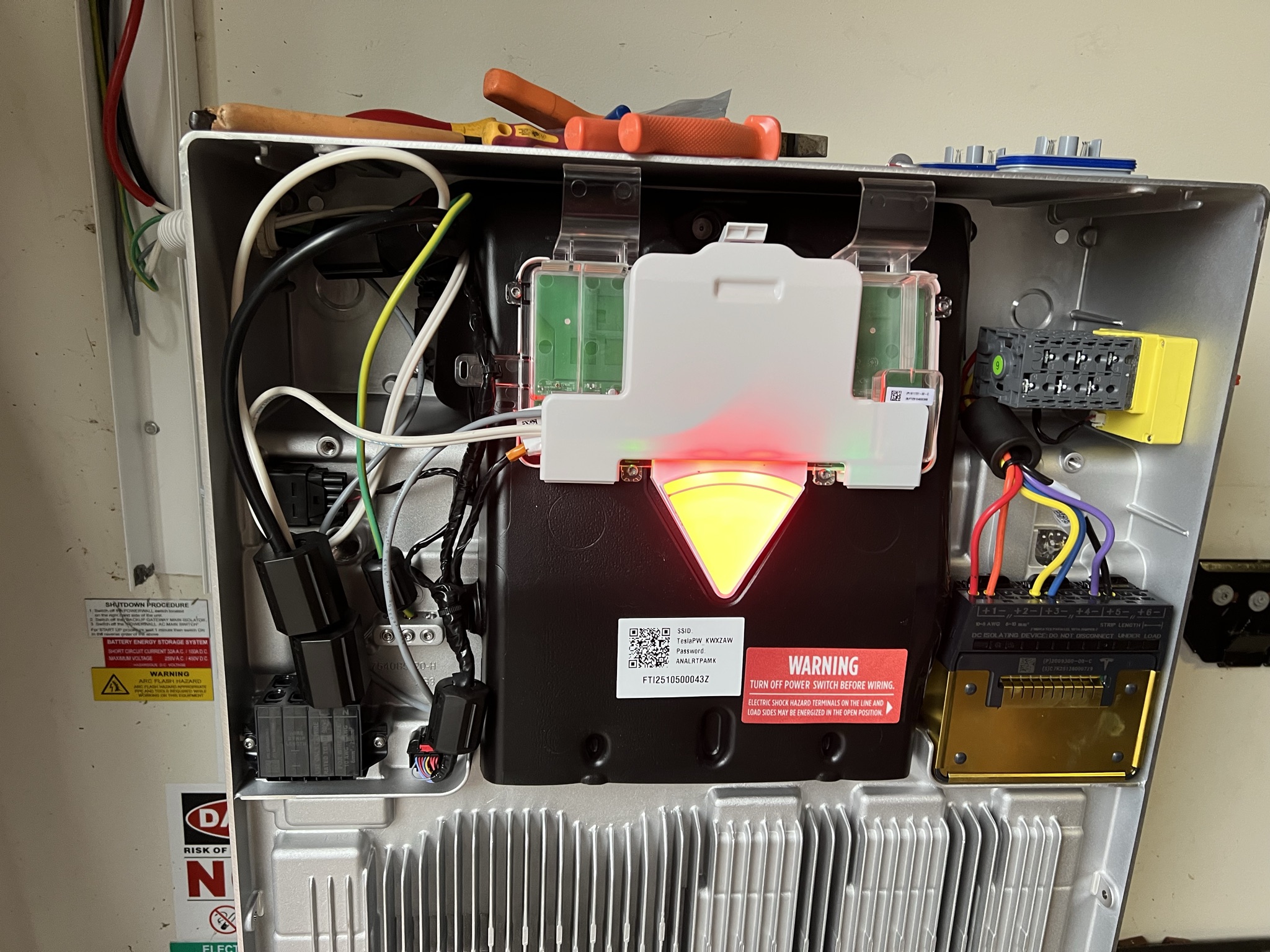
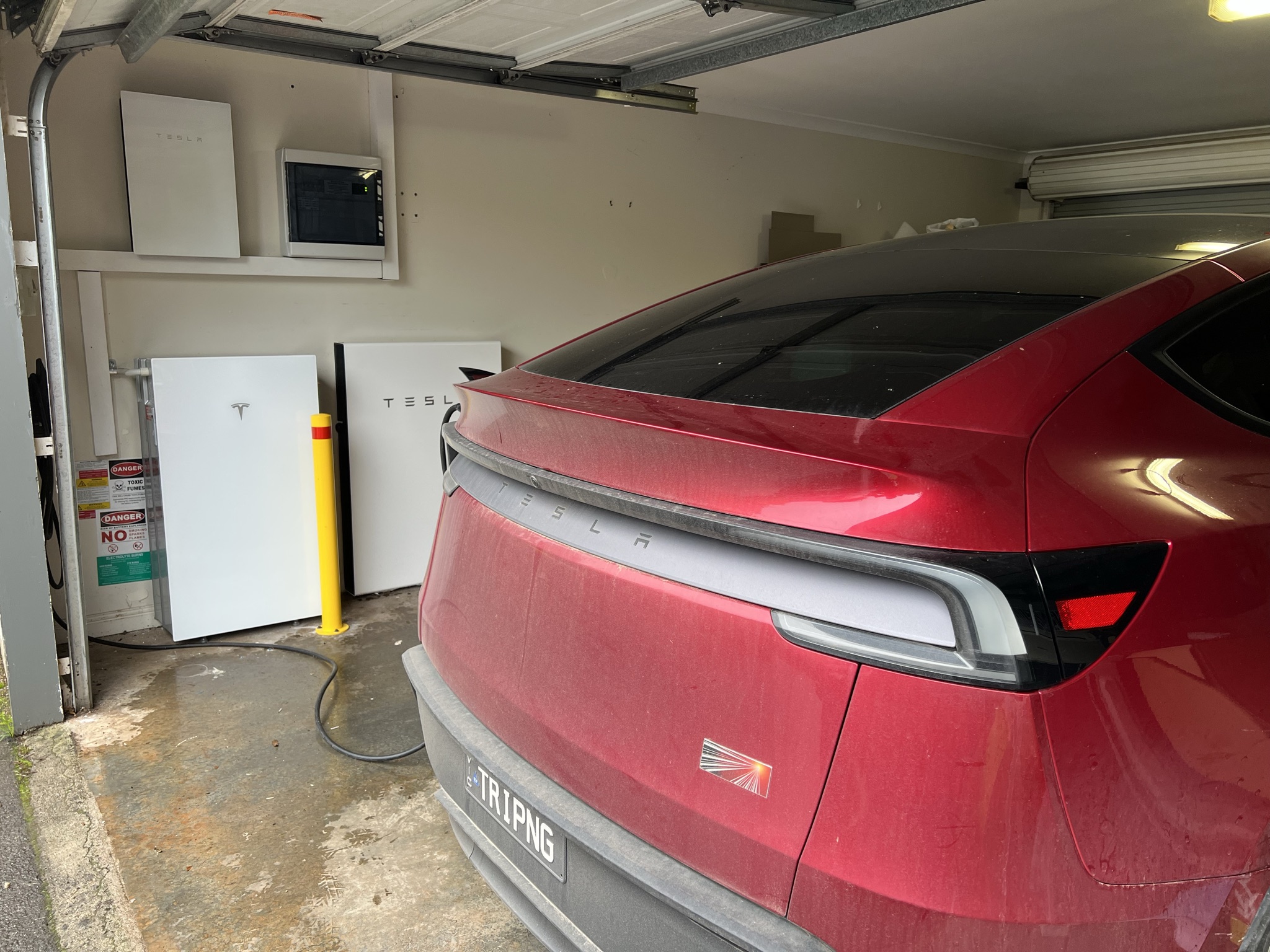
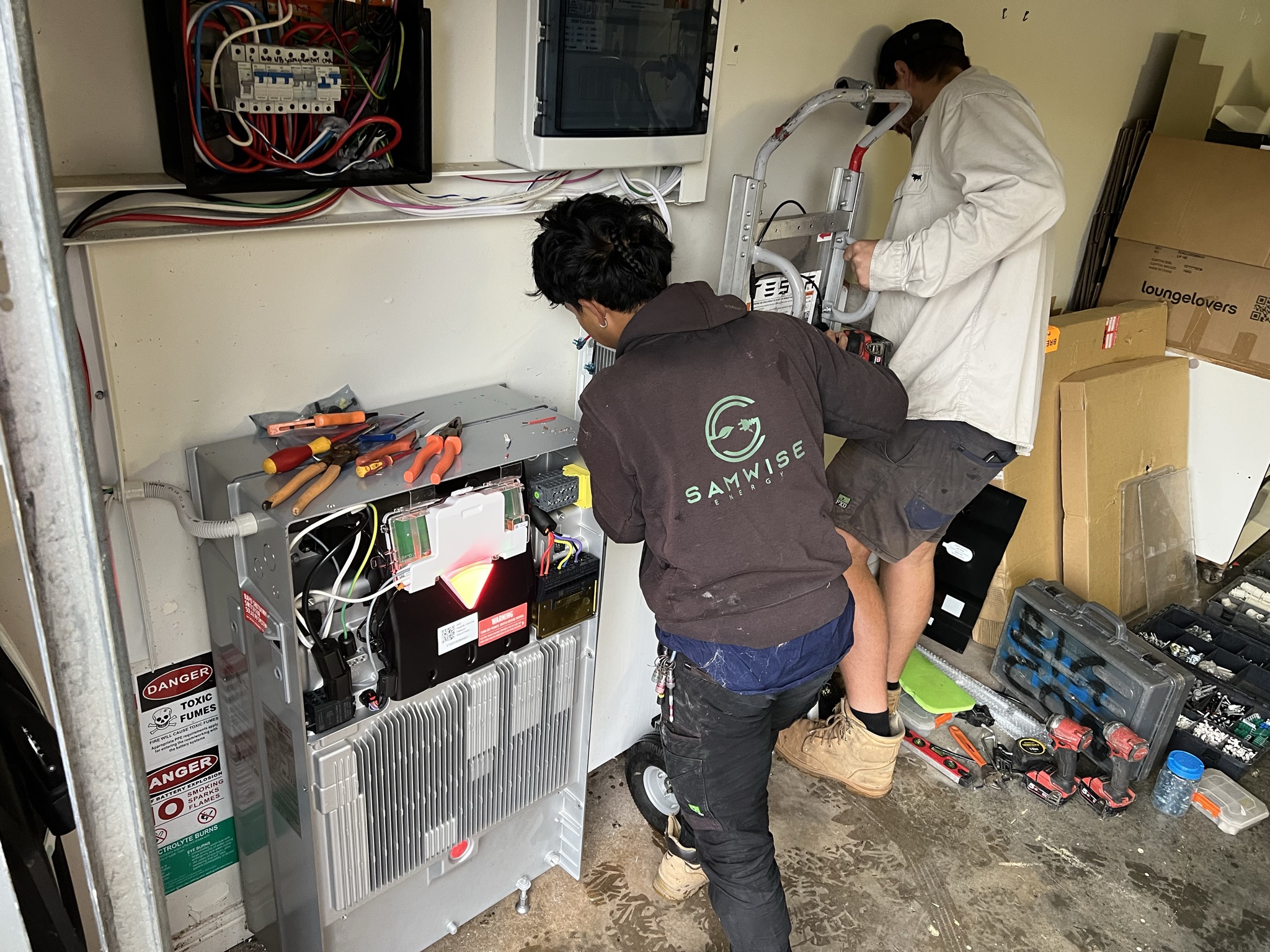
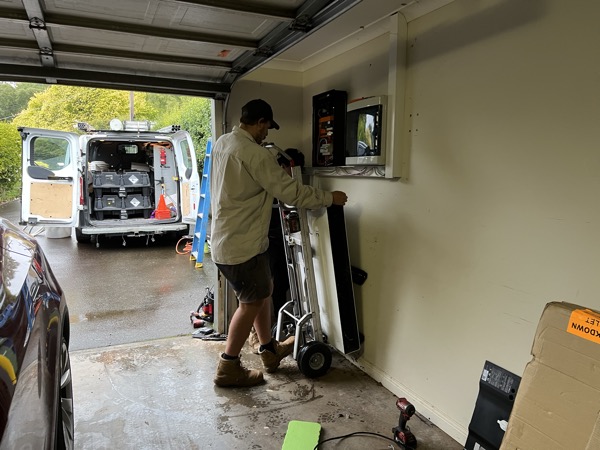
Three weeks ago I wasn't sure I'd get a battery installer at all before the rebate deadline. At 7:22 this morning, Jacob and Nathan from Sapphire Solar (aka Samwise Energy) pulled into the driveway with a van full of brackets, cabling and a pair of very heavy Tesla units — and the conviction they'd have us done by lunchtime.
For the back-story on why we're tripling our home battery, see last month's post. Today's the install.
The hardware:
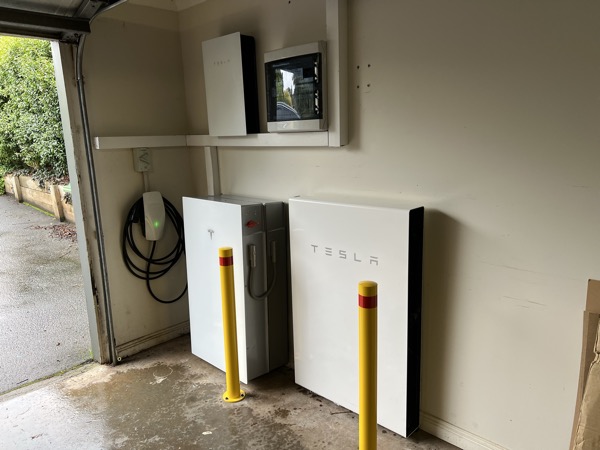
- Powerwall 3 — 13.5 kWh storage, 10 kW continuous output, with its own inverter built in. LFP chemistry (lithium iron phosphate, with no nickel and no cobalt).
- Powerwall 3 Expansion — another 13.5 kWh of storage, but no extra inverter (the PW3 next to it does the talking).
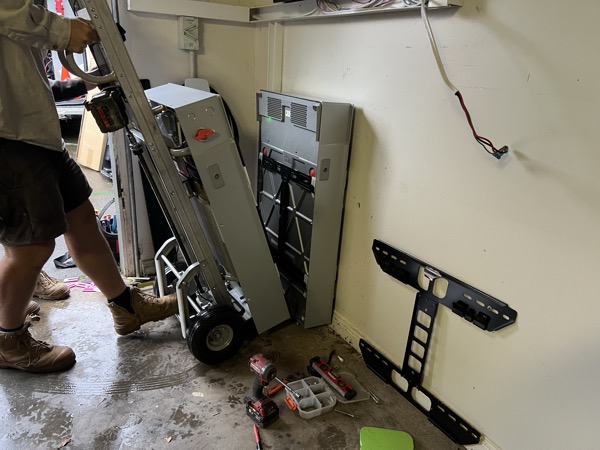
Our 2023 Powerwall 2 has been shifted to the right and remounted on the same wall, but isn't wired back in yet. It has to wait for Tesla to release the firmware update that lets a Powerwall 2 and a Powerwall 3 share a system. Sapphire are penciled in to come back next month for the reconnect — firmware willing.
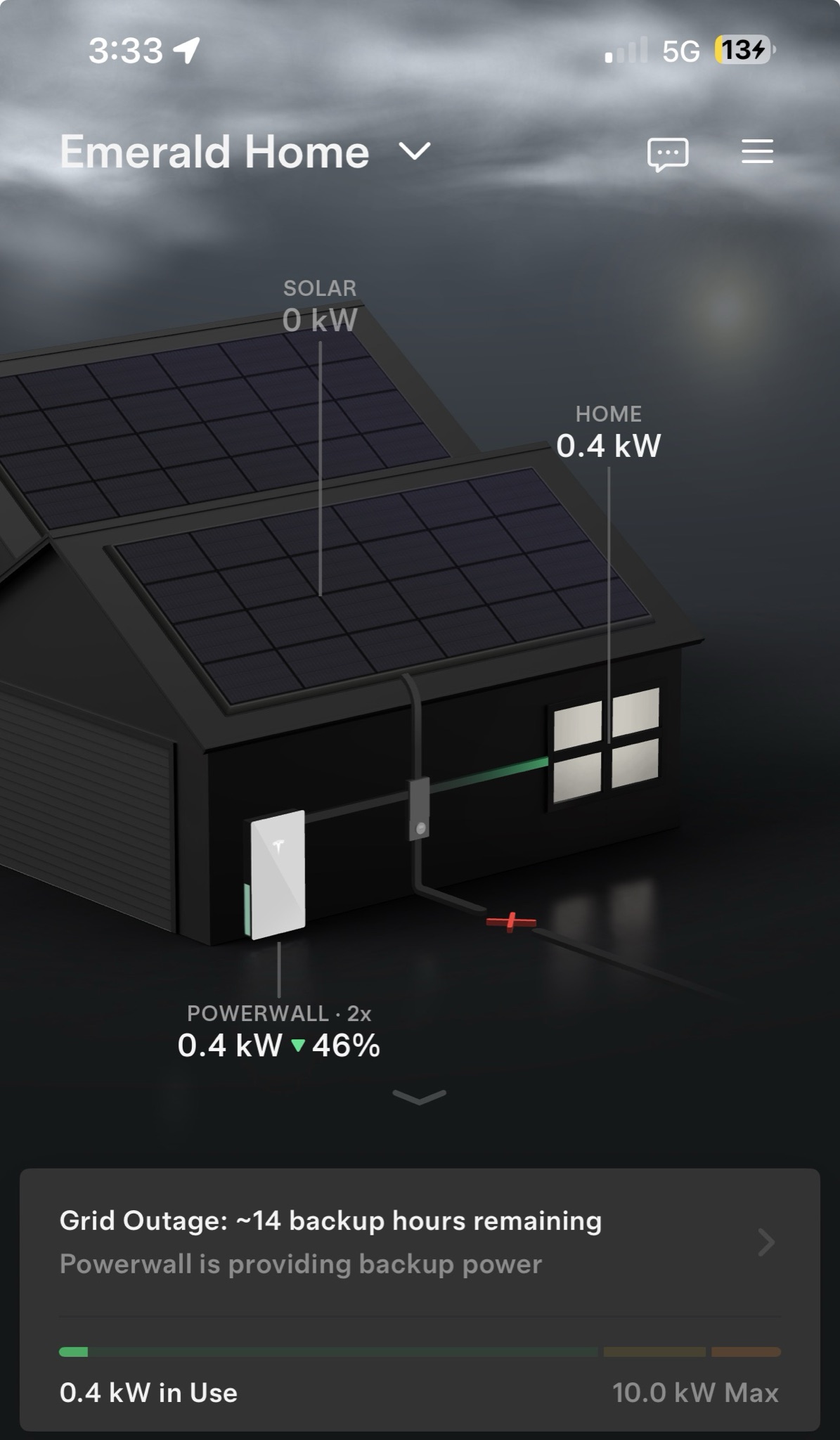
Once all three are live, we'll be at 40.5 kWh of total storage and 15 kW of sustained output — enough, during a grid outage, to run the air con, heat pump, EV charger and induction stove all at once. Not that we'd plan to. But we could.
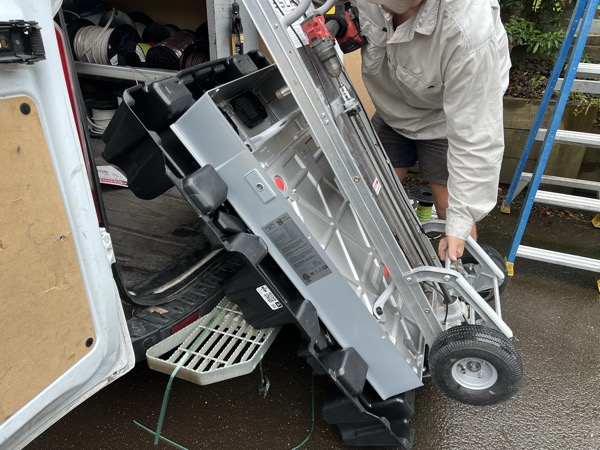
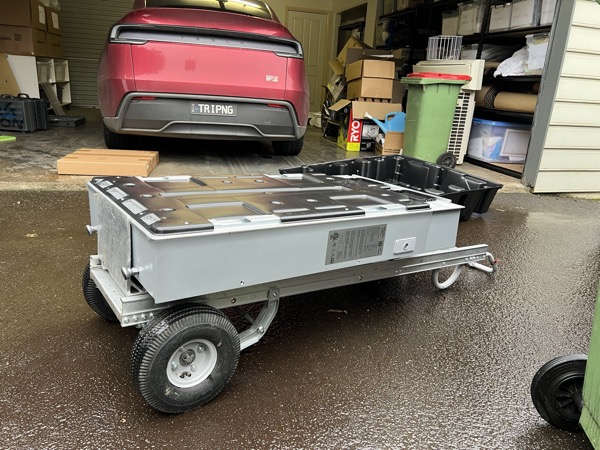
Jacob generously offered to answer any of my questions, and was clearly enthusiastic about the gear. He told me Tesla installs are noticeably easier than other brands: the batteries arrive in a reusable plastic shipping crate that gets sent back to Tesla, and there's a purpose-built Powerwall 3 Lift Tool — a small trolley with a drill-powered scissor lift — for raising each unit onto its bracket.
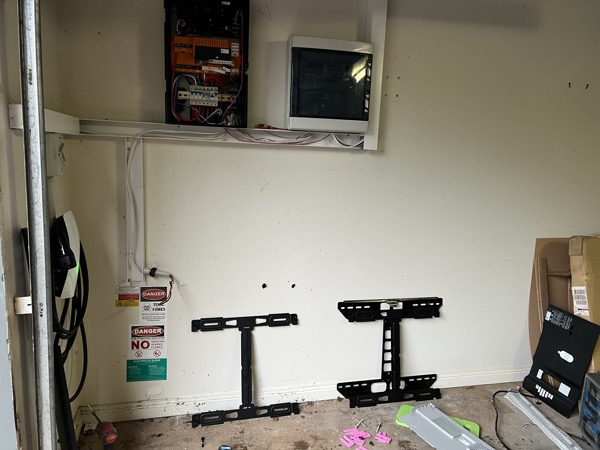
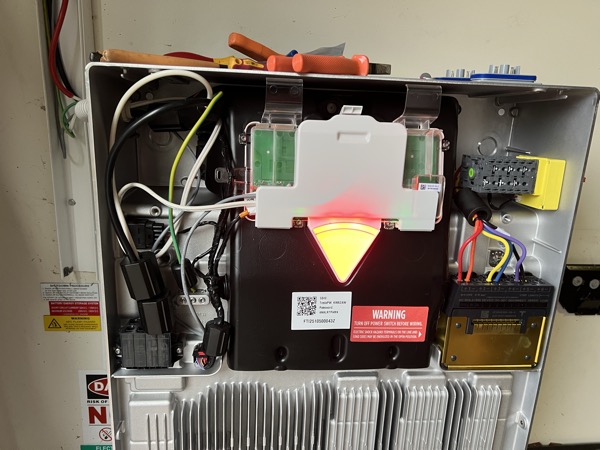
Mounting went quickly. Two new units side-by-side along the garage wall, two yellow bollards installed in front to keep the car at a respectful distance, and the gateway rewired. By mid-morning it looked finished.
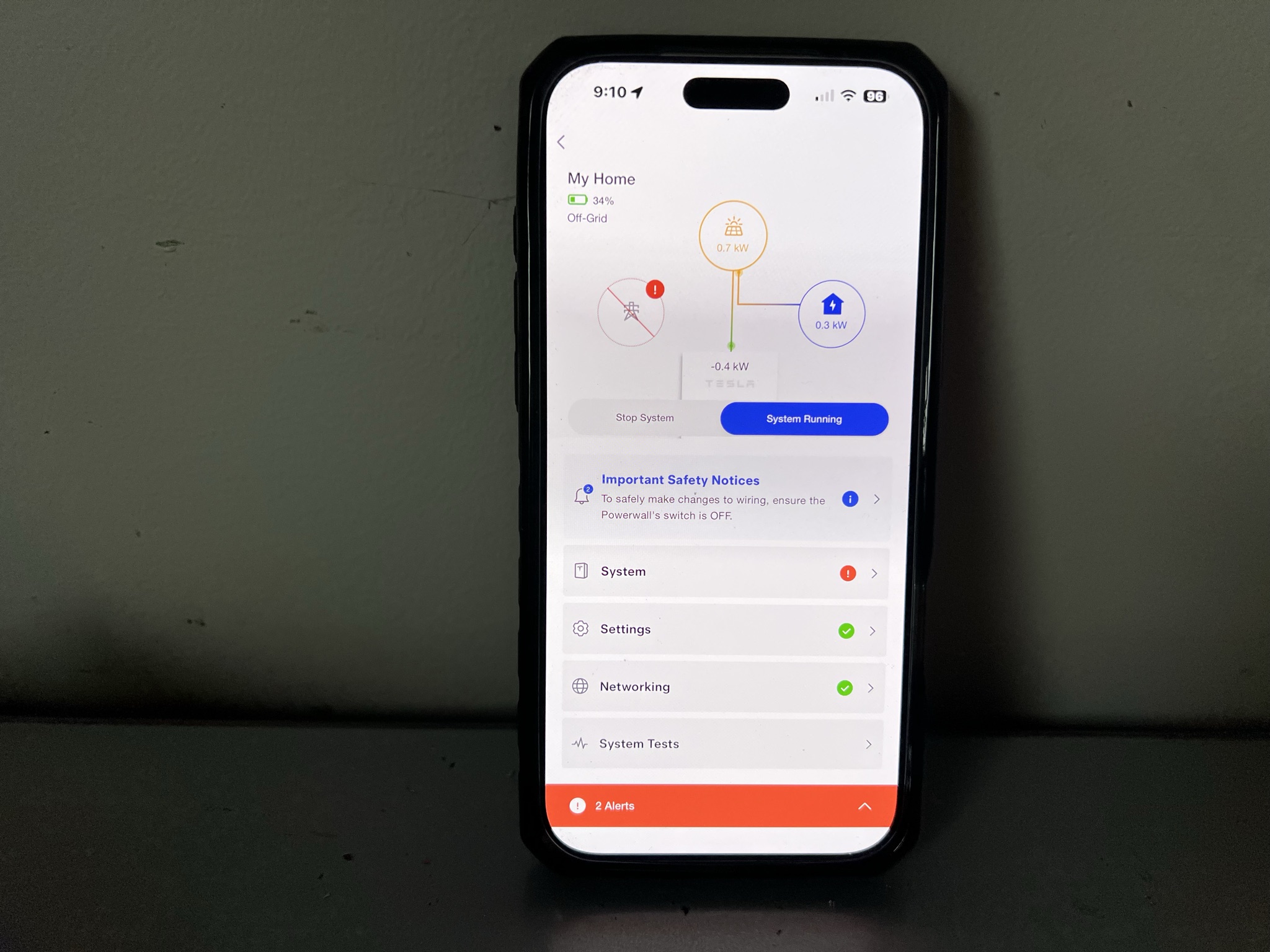
But it's not on yet. In Victoria, every battery install has to be signed off by an independent Licensed Electrical Inspector before the system can be switched on. The LEI will book a visit in the next week or two and issue a Certificate of Electrical Safety.
Out of pocket: $14,000 all up. The invoice came to $15,500, after Sapphire applied the federal Cheaper Home Batteries scheme's STC subsidy of $8,362 directly to the quote — without that, the headline price would have been just shy of $24,000. Then Tesla's Next Million Powerwalls promo knocks off another $1,500, though that one arrives later as a Visa Reward Card emailed after install, rather than a discount on the day. The net: two new batteries today cost about what we paid for our single Powerwall 2 three years ago. Battery prices are falling fast, and the government incentive is doing real work.
Tesla's $750-per-Powerwall rebate is live until the end of June for new orders — anyone else weighing it up?
Related Posts
- Part 2 — May 7 reconnect day, with Tesla's beta firmware Tesla Powerwall 2 Compatibility Beta 7 May 2026
- Last month — the announcement, and the firmware Tesla still has to ship Adding a second battery 20 Mar 2026
- Our original Powerwall, installed by Lightning Energy Our Powerwall — one of a million deployed 9 Sep 2025
- What to ask for in a battery installation 7 Dec 2025
- Part 3 — the fix that worked but nobody could explain The Powerwall fix I can't explain 14 May 2026
- Part 4 — what the fix actually was Powerwall puzzle answered 22 May 2026
- Part 5 — the 100 W parasitic rumour, checked against our data The 100 W parasitic rumour, checked 23 May 2026
This whole post is janky lol
Thankfully they are finally coming out with 3 phase equipment, that boat has sailed already for me. If they can make it happen fast & bring the prices closer to the competitors they might regain market share.
The ultimate home storage solution is 30kW 3phase whole of home backup. I find with doing 200km EV driving most days 50kWh storage isn’t quite enough, 100kWh would be easier to manage.
As for your EV, are you able to change at your destination, when solar is peaking during the day?
It’s great having 3 phase whole of house backup, can even keep charging the car at 11kW. That said when we had an outage I decided to pause charging until the power returned a few hours later.
https://www.facebook.com/Tesla.Tripping/posts/42844573344…
Our Emerald home's single phase means our wall charger tops out at 7.5 kW. Worth the trade for us because single phase made whole-house backup straightforward, but it is a slower charge. With our three batteries now (rated 15 kW combined), we'd have the headroom to keep the car charging through an outage, though I get the pause instinct.
https://www.facebook.com/100088529584679/posts/1008557645…